Plants Not Thriving? Do Some Detective Work to Solve Common Garden Problems
A lot of my work revolves around problem solving. It governs design, consultation, and just about every conversation I have with clients. But every so often, a project comes along that brings me to my knees. This property was one of those.
The landscape was beautifully designed, yet nothing was thriving. The homeowners were doing everything they thought they should to care for it. And still, the garden struggled. They asked me to design another bed on the property, but I hesitated. It felt irresponsible to take on anything new until I understood what was happening with the existing plants.
It took a bit of detective work to figure it all out. No single issue would have doomed the landscape on its own—but together, they explained everything.
Soil PH: Initially, I thought the stunted shrubs and lack of new growth was due to a soil PH issue. After testing in several areas, I found the levels were way too high (7.5-9) for the acid loving shrubs that needed something more in the range of 5.5. Over a period of time I treated the soil with sulfur and waited.
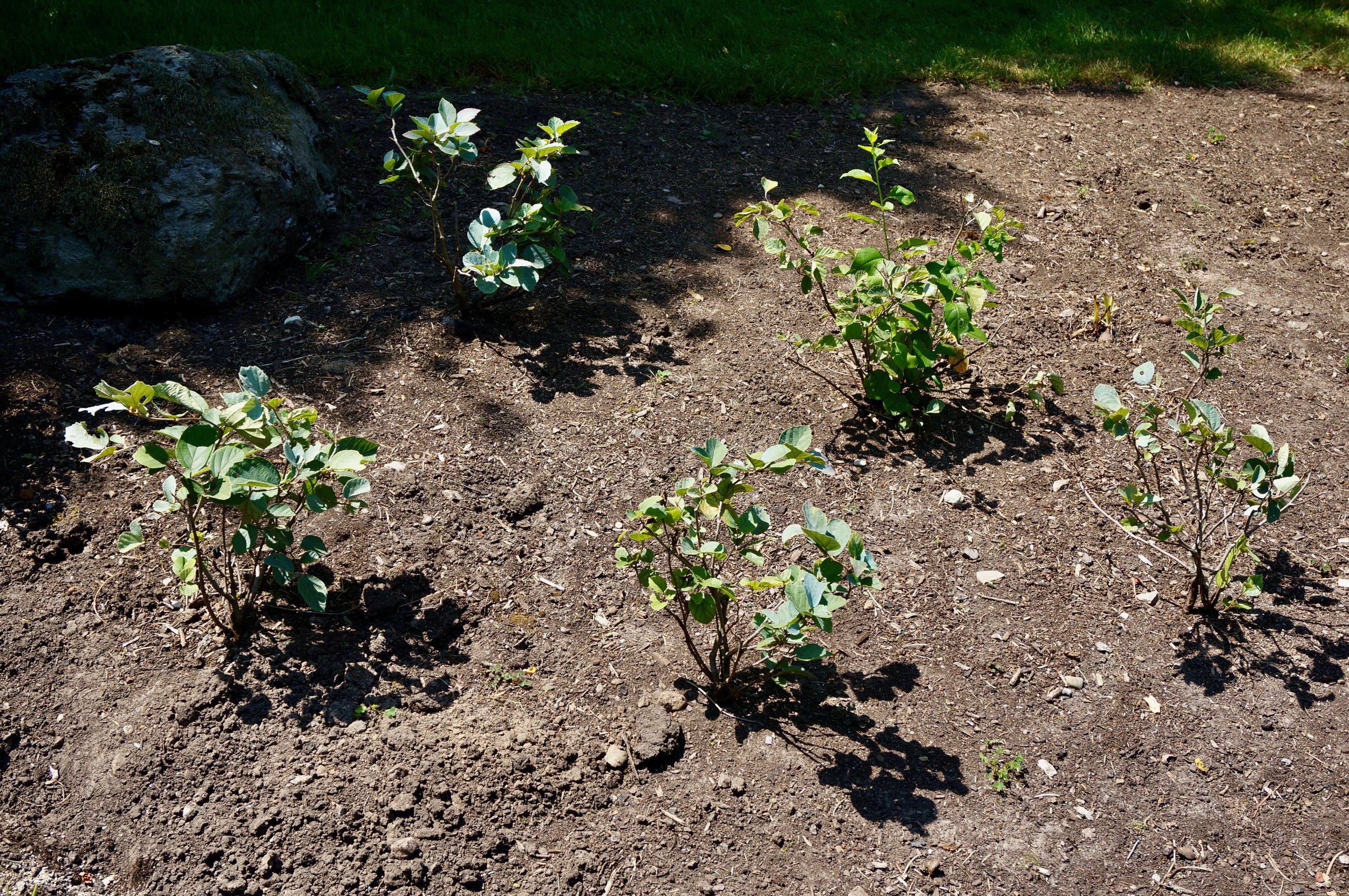
Stunted plant growth in Fothergilla.
As I started looking more closely, it became clear the soil pH issue was only part of the story.
Deer damage: After repeated trips to the property, I realized that deer browsing was much worse than I had originally thought. It repeatedly set plants back just as they were trying to establish. We needed more deer netting in the winter.
Insufficient water: It took me awhile to figure this out because the property was heavily shaded in most spots and the soil was heavy and clay-like. Plants didn’t appear to be wilting, but when I dug down around the plants, the soil was bone dry. Just enough to keep plants alive, but not enough to thrive. Increased watering made a huge difference.
Root competition: Pachysandra covered territory beneath most of the ericaceous shrubs. The shallow aggressive root system of the pachysandra was robbing shrubs of moisture and nutrients before they ever had a chance to access them. We removed pachysandra from around the base of the shrubs to alleviate the problem.
Insect damage: Damage from leaf miners to the boxwoods around the house added another layer of stress. A regular spraying program with horticultural oil improved the situation. We also top dressed the boxwoods with compost to stimulate new growth.
By the end of this project, I felt like that girl detective, Nancy Drew. Protecting plants from deer, correcting soil chemistry, rethinking water, and relieving root competition—tackling one problem at a time—was a deeply satisfying process. I captured much of that work in the video below, which walks through a step-by-step approach to improvement.
before and after solving landscape problems
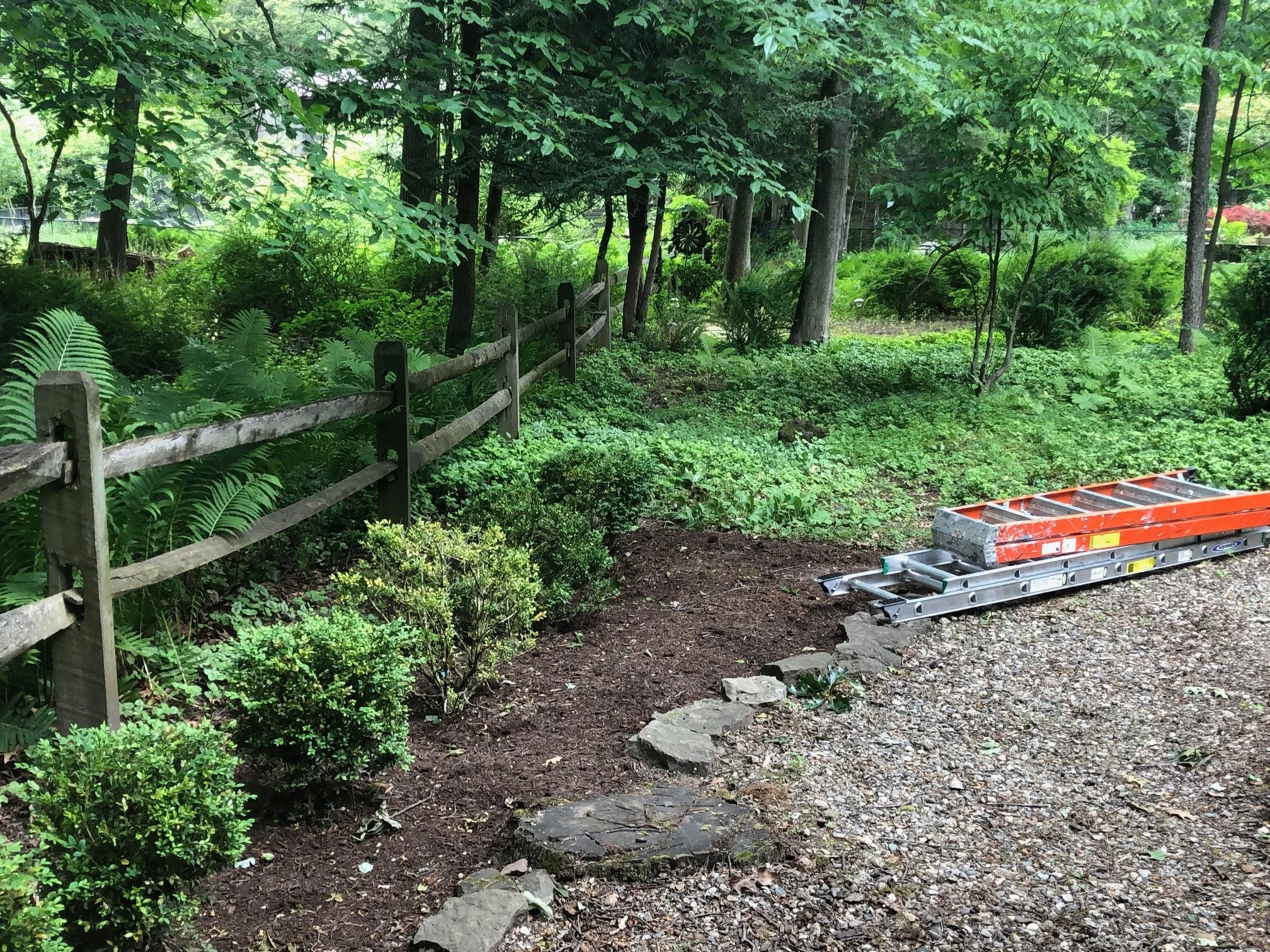
Once the problems were addressed, the plants took a quantum leap forward. Only then did it make sense to move on to something new. In part two, I’ll share how my detective work informed the next planting (before photo below) —and why solving problems first always leads to better design.