Tough garden conditions? Build a reliable plant palette that works
In my last post, I focused on the problems in the landscape I was working on and the steps I took to address them. Those challenges didn’t just need fixing—they shaped every decision that followed. Tough conditions call for reliable plants and a willingness to work within a more limited palette. While “limited” might sound restrictive, it doesn’t mean it has to be dull.
This next phase builds on those solutions and begins to turn them into a workable design.
The big picture: Not ideal - an enormous bed of pachysandra, junky barberries, a dogwood tree that wasn’t performing well and some questionable looking boxwoods. This spot is heavily shaded and receives about 3-4 hours of sun at most. Due to the trees it is very root ridden in many areas.
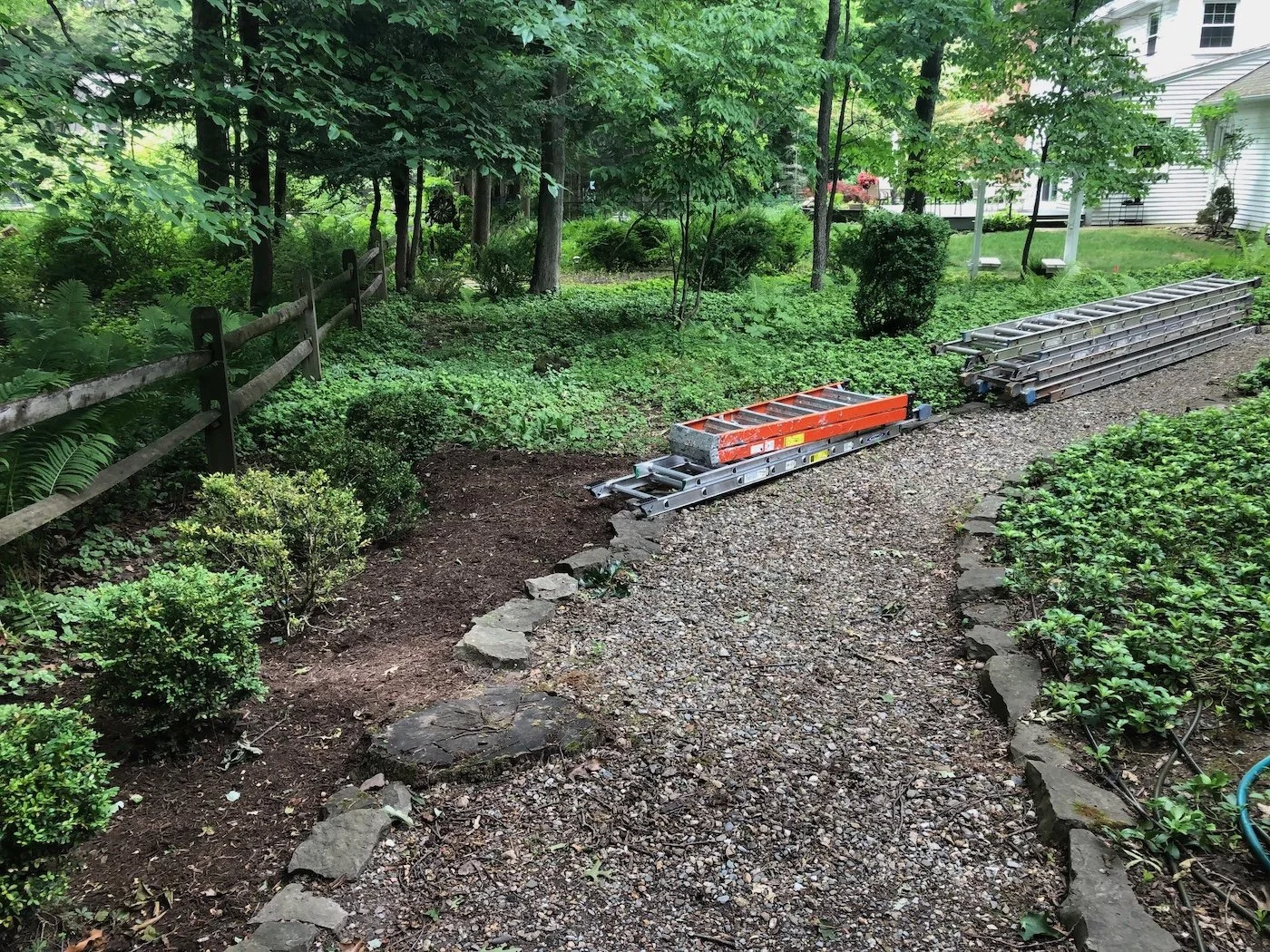
Some of the boxwoods along the fence line were transplanted to other areas.
Oh the opposite side of the path, there is more pachysandra and not much else.
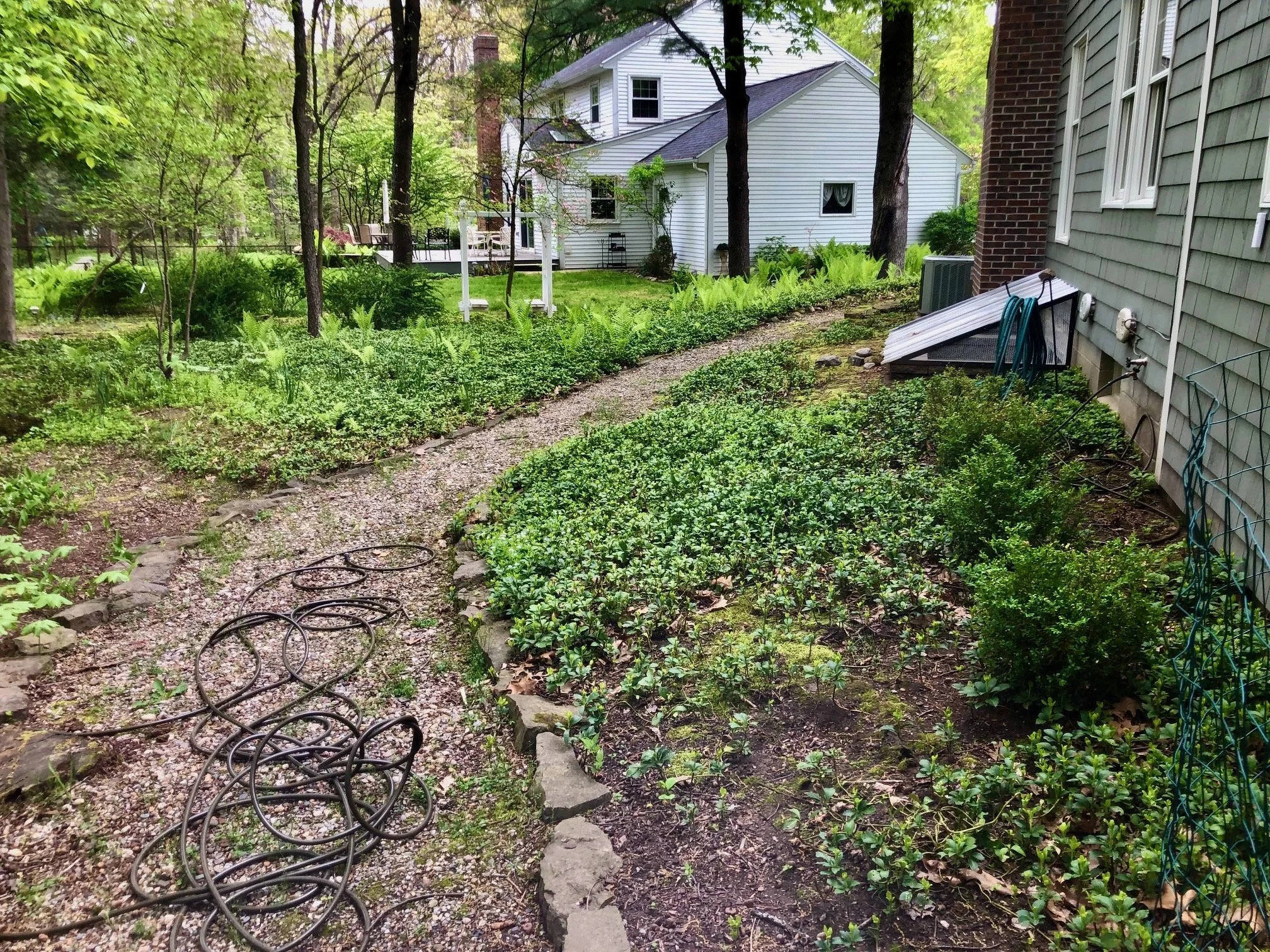
On the left side, we removed all of the pachysandra from planting bed, but left the existing Ostrich ferns in the background to soften it up. We decided to improve the gravel path as it was unstable and sloppy looking.
Planting: Due to the shade, deer and rooty soil, plant choices were tough. Cephalotaxus fastigiata was about the only upright evergreen I could think of that would tolerate these conditions. I knew the deer wouldn’t eat it so it seemed a safe choice. It was planted along the property line to serve as a hedge to obliterate the piles of debris that had accumulated on the neighbors side. I chose smaller plants figuring they’d be easier get established.
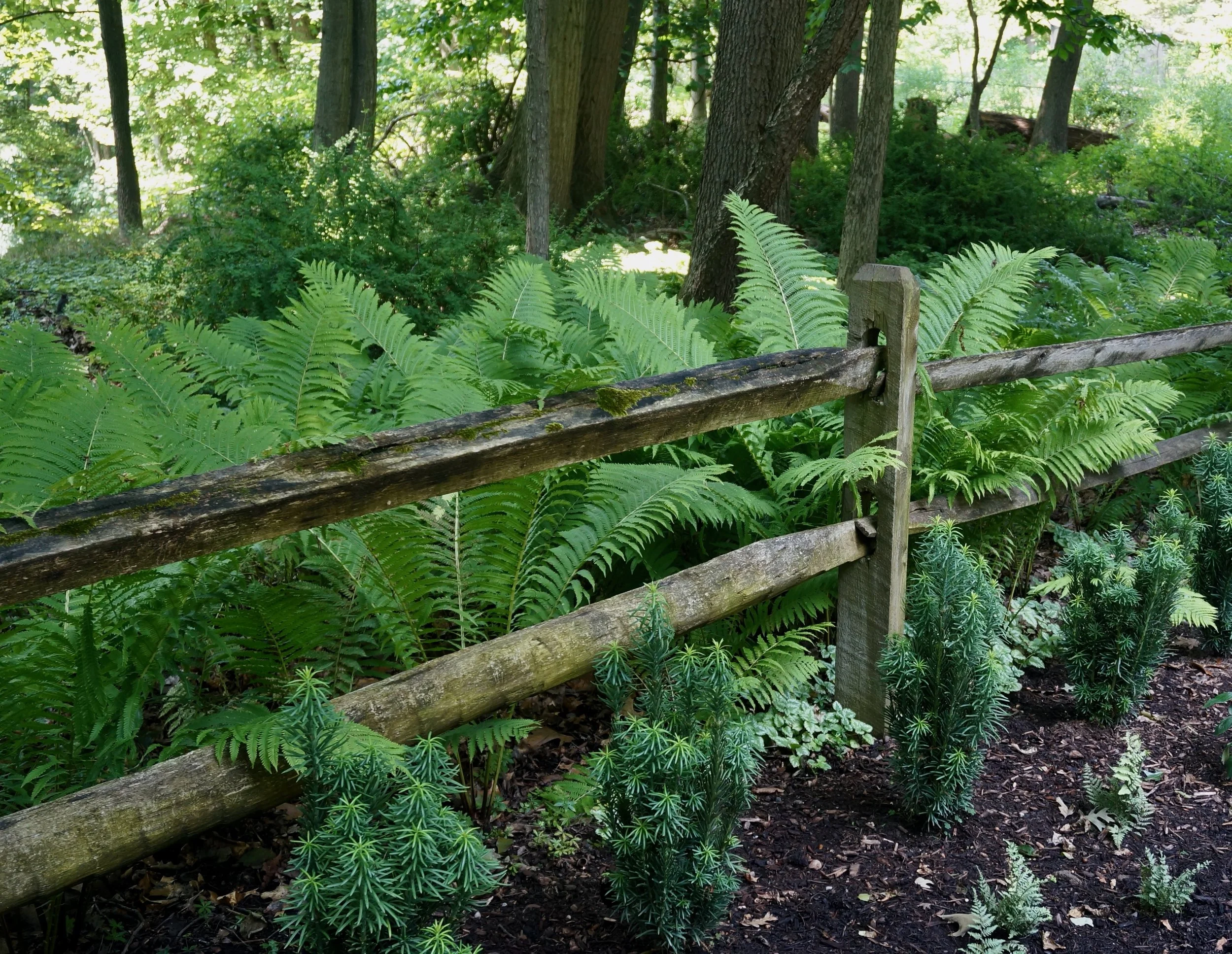
Cephalotaxus fastigiata, aka Japanese Plum Yew adapts well to dryish soil and partial shade.
Because I knew not much would flower in such a shady spot, I focused on texture and foliage color. Notice that I’ve netted the hydrangeas. In the past I’ve used Hydrangea arborescens ‘Annabelle’ because the deer left it alone, but I guess they didn’t get the memo here. I’m hoping once they mature and less tender they’ll be less appealing.
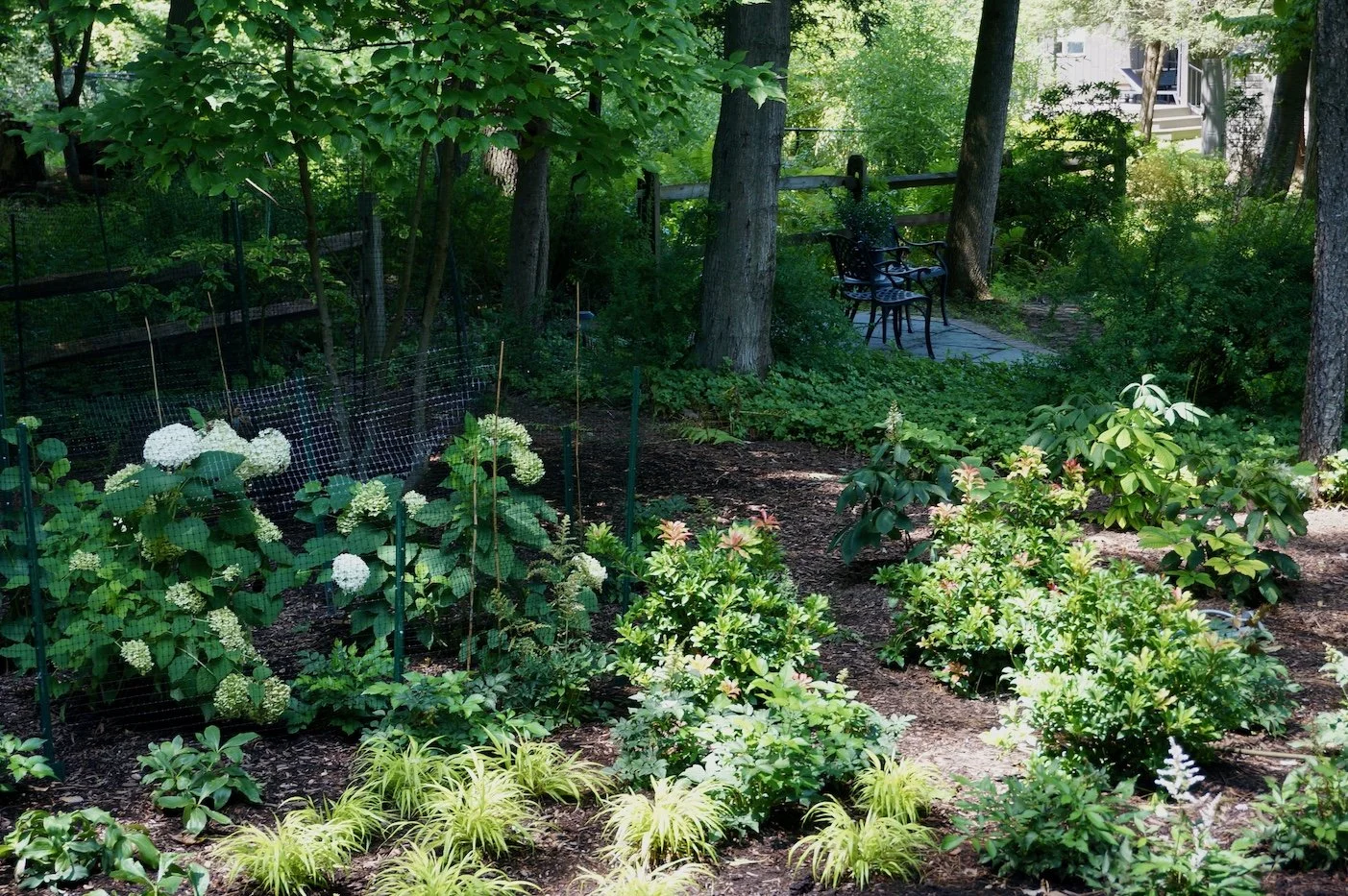
Left to right: Hellebore, Hydrangea arborescens ‘Annabelle’, Hakonochloa macra ‘All Gold’, Astilbe, Pieris japonica ‘Mt Fire’- background: Aesculus parvifolia ‘Pavia’ (aka Bottlebrush Buckeye).
We removed all of the pachysandra from the planting bed but I knew what was left in the surrounding areas would creep right back in if given the chance. To prevent that, we installed wide steel edging around the perimeter.
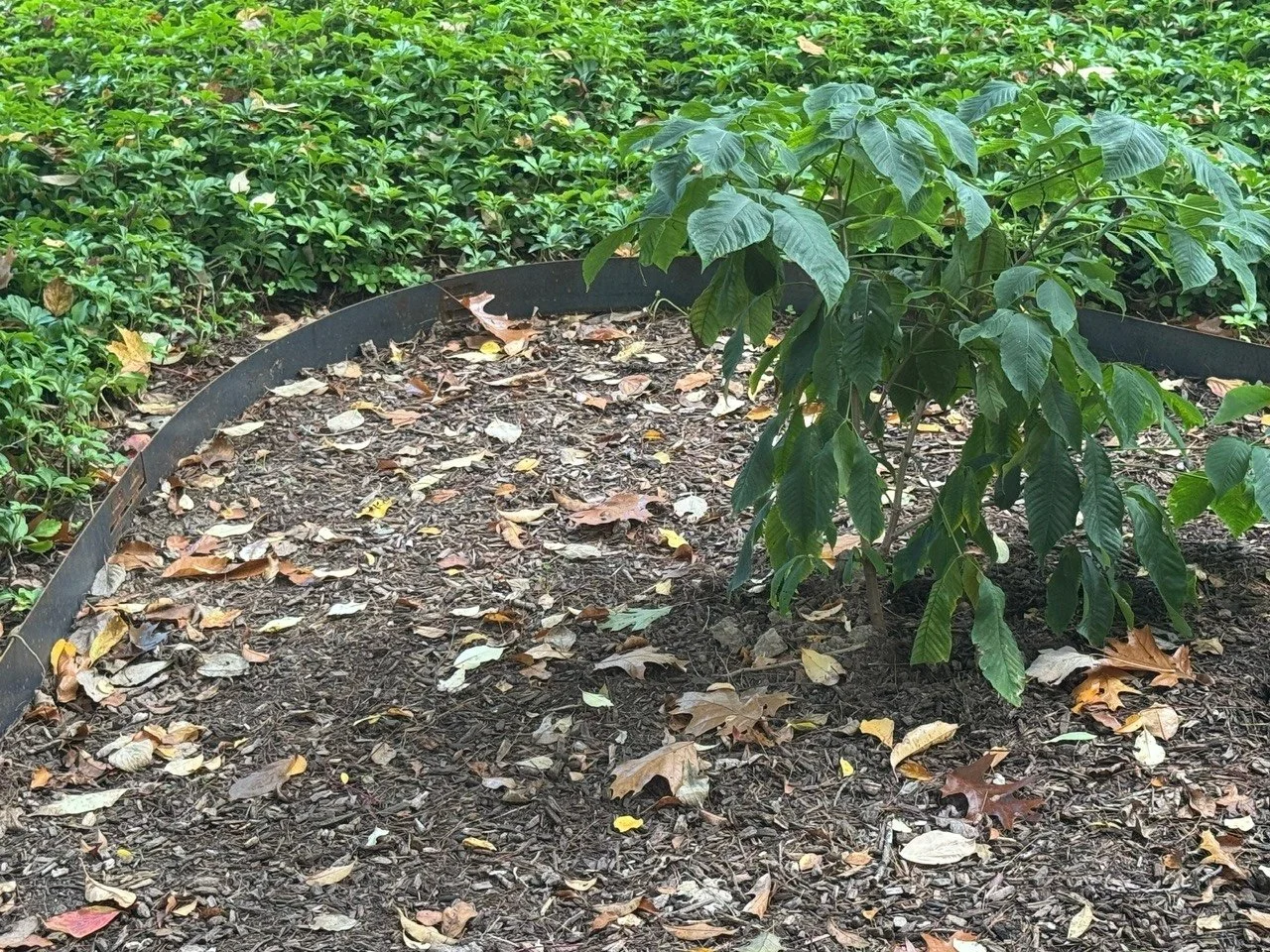
Bottlebrush Buckeye, Aesculus parvifolia ‘Pavia’ is a terrific native shrub for shady areas. Showy reddish flowers adorn it in May - the rest of the time the foliage is quietly respectable.
Below is a shot of the finished planting. I transplanted a bunch of the existing Ostrich ferns to the bare spot in the corner - about my only choice for that spot!
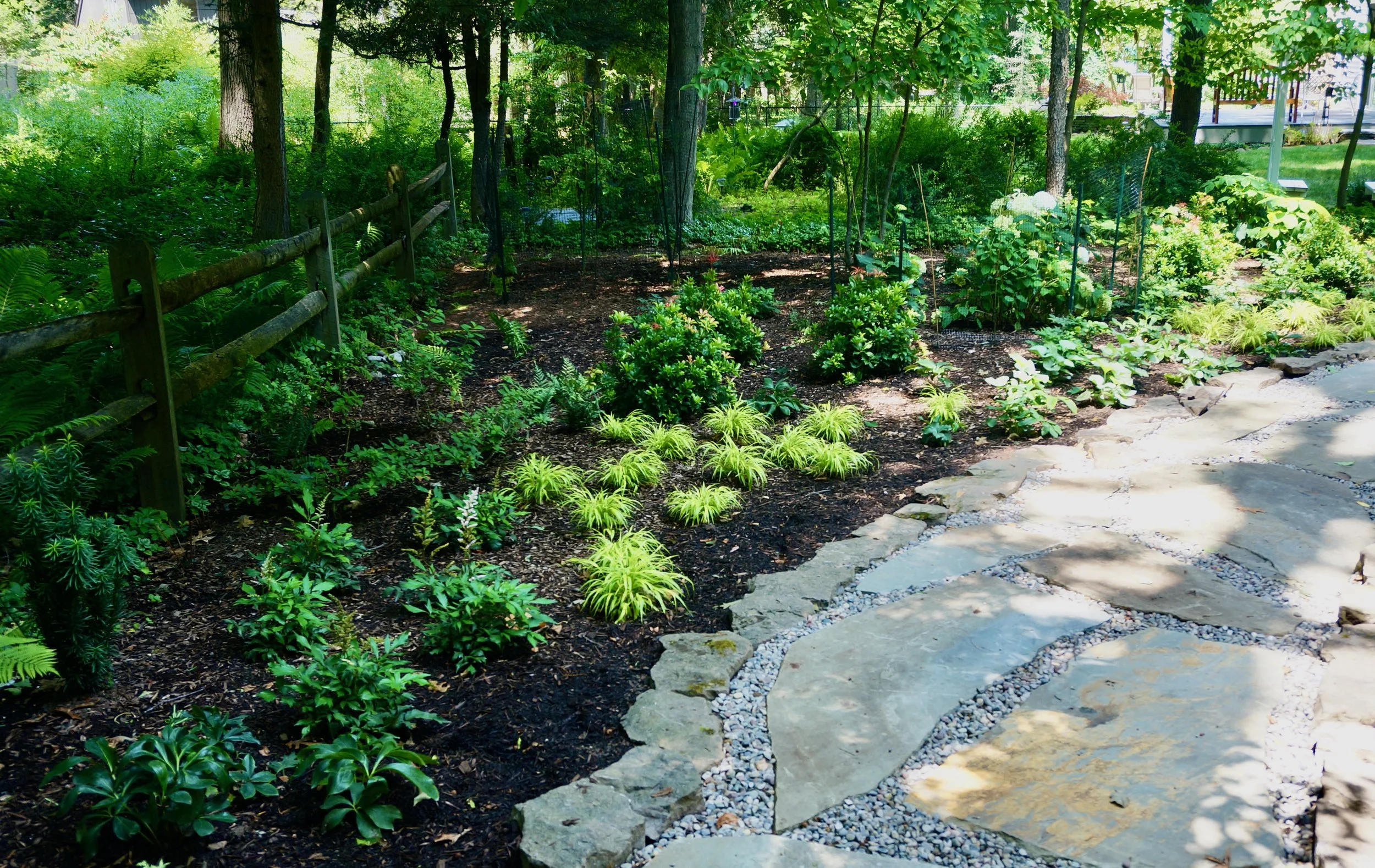
The original gravel path was unnattractive and difficult to navigate. Loose bluestone paving provided a more functional and aesthetic solution.
Here is a shot of the other side of the path. I contrasted the green and white variegation of the Cornus ‘Ivory Halo’ (aka Red Twig Dogwood) with Cephalotaxus prostrata, (Plum Yew). Unlike the upright variety I used by the property line, this one is a spreader. I love the richness of texture it adds. It’s one of the few evergreens the deer don’t eat.
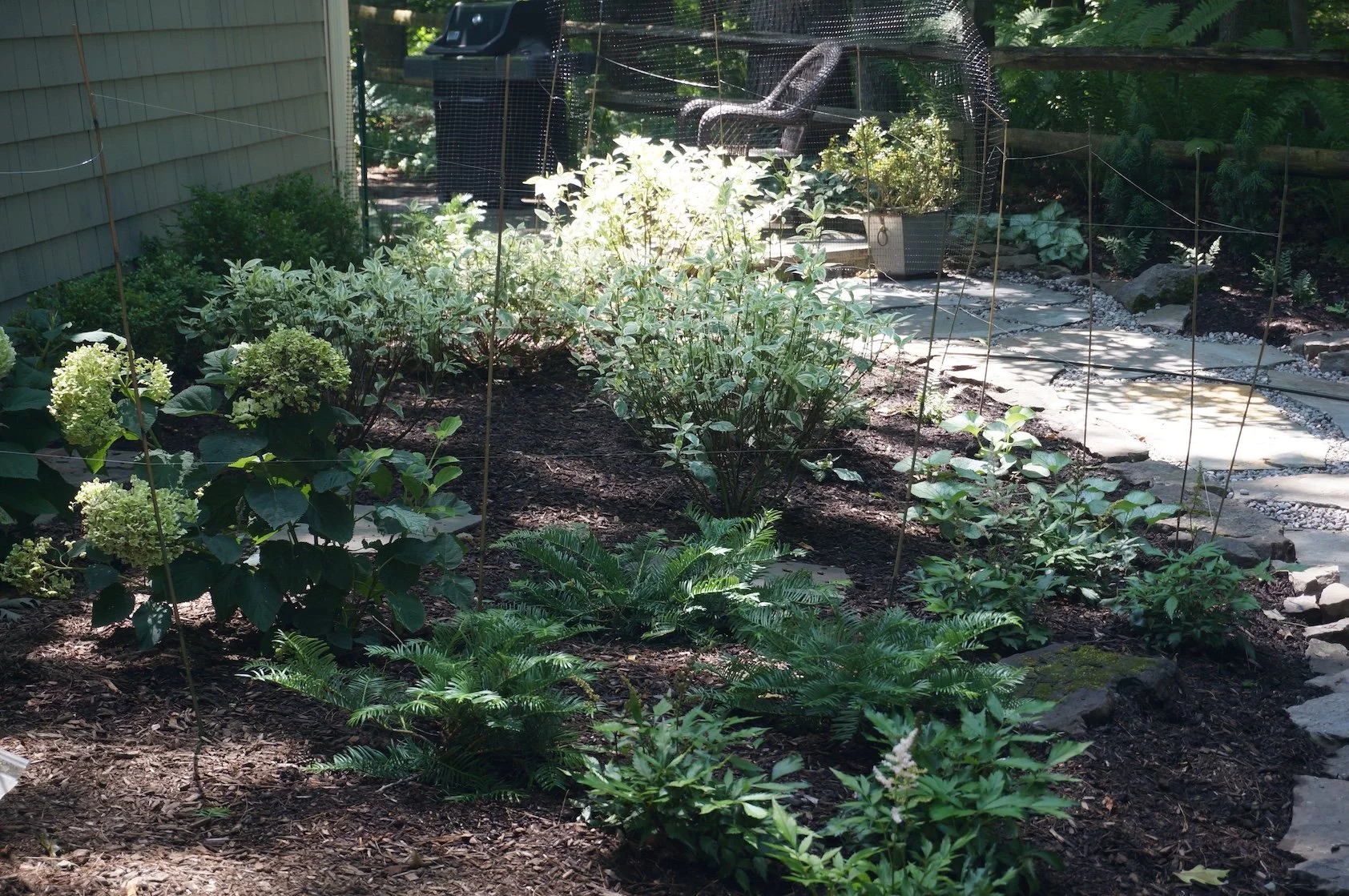
Plants left to right: Hydrangea arborescens ‘Annabelle’, Cephalotaxus prostrata, Cornus ‘Ivory Halo’ - front of border; Astilbe, Hellebore, Brunnera ‘Jack Frost’
To incorporate the patio area, I extended this bed around the corner to the back of the house. I was able to reuse some of the better looking boxwoods in these areas and continued the green, white and silver theme.
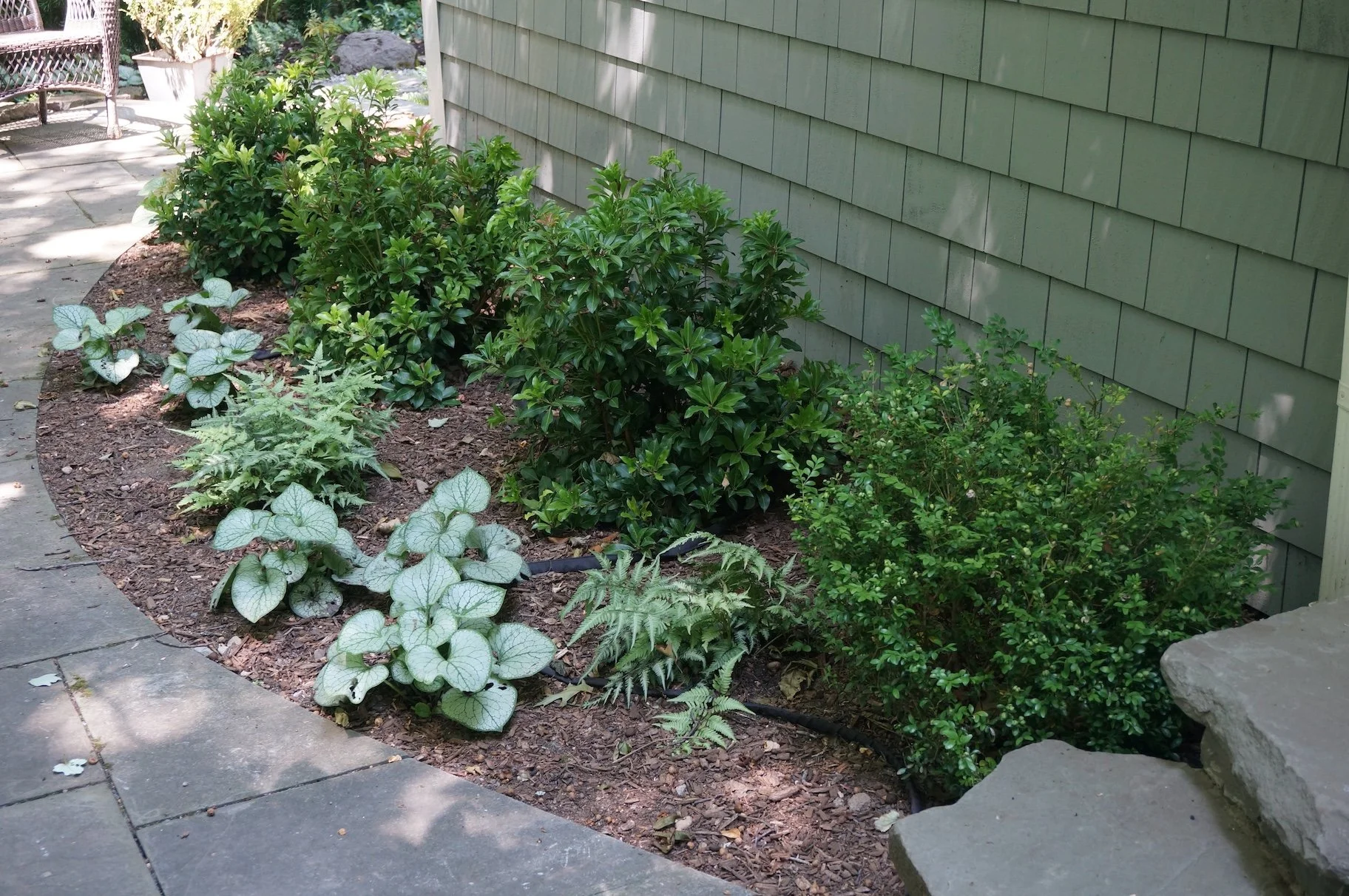
Plants back to front: Pieris japonica ‘Cavatine’, Brunnera ‘Jack Frost’ and Athyrium pictum ‘Ghost’
When planting in a tough area, it helps to change your perspective. Instead of throwing up your hands in frustration, ask, “What would thrive here—and how can I make the most of it?” The answer may be a shorter list than you wanted—but it’s a better one. Working within those limits doesn’t diminish a garden; it defines it.
Here is the list of plants I repeated throughout this space. These dependable performers can handle shade, occasional deer browsing and drier soil - making them ideal for repeating throughout the planting and building a cohesive design.
Shrubs
Aesculus parviflora ‘Pavia’ (Bottlebush Buckeye) — Chosen for its red flowers; all varieties are strong performers
Buxus (Boxwood) — Provides structure and year-round form
Cephalotaxus harringtonia ‘Fastigiata’ (Japanese Plum Yew) — Upright, shade-tolerant evergreen
Cephalotaxus harringtonia ‘Prostrata’ — Low, spreading form for groundcover effect
Cornus alba ‘Ivory Halo’ — Bright variegation for contrast in semi shade
Pieris japonica ‘Cavatine’ — Compact evergreen with early-season flowers. Because this one is small, I planted it by the house. I used ‘Mt. Fire’, a taller variety in the main bed.
Perennials
Astilbe — Reliable bloom and texture; performs well in shade. Varying bloom times.
Athyrium niponicum var. pictum (‘Ghost’ used here) — Adds soft color and contrast
Brunnera macrophylla (‘Jack Frost’ used here) — Variegated foliage brightens darker areas
Helleborus — Early blooms and excellent deer resistance
Hakonechloa macra ‘All Gold’ — Flowing form and color for movement and contrast
I’ll be writing more about deer proof plants in my next post, so stay tuned!